Oracle Sales
Oracle SalesOracle Sales es la solución de gestión de relaciones con clientes (CRM) de Oracle Cloud enfocada en automatizar y optimizar el ciclo de ventas. Como parte de la suite Oracle CX, ofrece un entorno unificado en la nube para la captura, seguimiento y gestión de oportunidades comerciales. Su arquitectura SaaS (Software as a Service) garantiza actualizaciones continuas, escalabilidad elástica y un modelo de suscripción que facilita la adopción sin grandes inversiones en infraestructura.
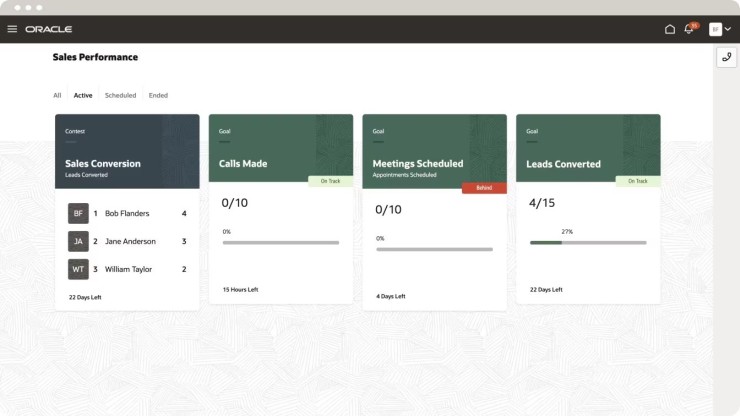
En el núcleo de Oracle Sales se encuentran módulos especializados en la gestión de leads y oportunidades, pronósticos de ventas, configuración de productos y precios (CPQ) y generación de propuestas. Incluye funcionalidades de pipeline management que permiten visualizar el estado de cada oportunidad, reglas de asignación automática de leads y alertas de seguimiento basadas en reglas de negocio. Además, incorpora capacidades de analítica integrada y paneles configurables que ofrecen métricas de rendimiento en tiempo real, como tasa de cierre, rotación de cartera y previsiones ajustadas.
La plataforma se apoya en Oracle Fusion Cloud Infrastructure para garantizar alta disponibilidad y seguridad a nivel empresarial. Integra de forma nativa con otras soluciones de Oracle CX—como Marketing, Service y Commerce—y con herramientas de terceros mediante API REST y adaptadores preconstruidos. Asimismo, dispone de tecnologías de inteligencia artificial y machine learning (Oracle Adaptive Intelligence) que sugieren acciones de venta, puntuación de leads y próximas tareas recomendadas, contribuyendo a una experiencia de usuario más proactiva y centrada en datos.
Funcionalidades de Oracle Sales
Gestión de cuentas, contactos y oportunidades
Oracle Sales permite registrar, organizar y segmentar toda la información relativa a cuentas (empresas), contactos (personas) y oportunidades de negocio. La plataforma proporciona vistas 360° de cada cliente, integrando datos internos y externos (como noticias, cambios organizativos o actividad financiera) gracias a la tecnología DataFox. Esta capacidad de enriquecimiento automático de datos permite trabajar con información más precisa y actualizada, reduciendo errores y tiempos dedicados a la investigación manual.
Automatización de ventas y flujos de trabajo
El sistema facilita la automatización de tareas comerciales repetitivas, como la asignación de leads, el envío de recordatorios, la creación de seguimientos y la generación de actividades a partir de eventos específicos. Los flujos de trabajo son personalizables y permiten definir reglas que se adapten a los procesos particulares de cada organización. Esta automatización busca liberar tiempo para que los vendedores se centren en tareas de mayor valor añadido, como el cierre de negocios.
Forecasting y análisis predictivo
Oracle Sales ofrece capacidades avanzadas de previsión de ventas (forecasting), apoyadas por algoritmos de inteligencia artificial que aprenden del comportamiento histórico y actual de las oportunidades. Estos modelos permiten estimar ingresos futuros con mayor precisión y detectar riesgos de desviación en tiempo real. El sistema también permite establecer diferentes escenarios de previsión y desglosar los datos por territorio, equipo, producto o región, facilitando la toma de decisiones estratégicas y operativas.
Lead scoring y priorización inteligente
Gracias al uso de IA y machine learning, Oracle Sales asigna puntuaciones dinámicas a cada oportunidad comercial, basándose en múltiples variables: comportamiento del cliente, similitudes con casos anteriores, tamaño de la cuenta, etapa del ciclo de venta, entre otros. Esto permite a los equipos de ventas priorizar los leads con mayor probabilidad de conversión y enfocar los esfuerzos de manera más eficiente.
Integración con Oracle CX y otros sistemas
Una de las fortalezas principales de Oracle Sales es su integración nativa con otras soluciones del ecosistema Oracle Cloud, como Oracle Marketing, Oracle Service, y Oracle ERP. Esta conectividad permite una visión unificada del cliente a lo largo de todo su ciclo de vida, facilita la sincronización de procesos entre departamentos y elimina silos de información. Asimismo, se ofrecen APIs y conectores para integrar con herramientas externas como Microsoft Outlook, sistemas de telefonía, redes sociales o soluciones de terceros.
Experiencia de usuario asistida por IA
Oracle Sales incorpora asistentes digitales que utilizan procesamiento de lenguaje natural (PLN) para facilitar la interacción del usuario con la plataforma. Los usuarios pueden solicitar información, crear registros o actualizar datos mediante comandos de voz o texto, ya sea desde escritorio o dispositivos móviles. Esta funcionalidad mejora la usabilidad y permite capturar datos en tiempo real durante las interacciones comerciales, incluso en entornos de movilidad.
Movilidad y acceso desde cualquier dispositivo
La solución está diseñada para ser utilizada tanto en entornos de escritorio como móviles, con aplicaciones nativas para iOS y Android. Los vendedores pueden acceder a información crítica del cliente, registrar actividades o recibir notificaciones contextuales mientras están en desplazamiento, lo que mejora la productividad de los equipos de campo y asegura una experiencia omnicanal coherente.
Informes, analítica y tableros interactivos
Oracle Sales incluye herramientas de análisis integradas que permiten construir dashboards e informes personalizados. Estos informes pueden visualizar el estado del pipeline, el rendimiento de los vendedores, los niveles de actividad comercial o las desviaciones respecto a objetivos. También se pueden combinar datos de ventas con métricas de marketing o finanzas para ofrecer una visión más estratégica del negocio.
Análisis técnico de Oracle Sales
Oracle Sales Cloud, también conocido como Oracle CX Sales, constituye la apuesta de Oracle por la automatización y optimización del ciclo comercial. Basado en Oracle Fusion Cloud Infrastructure, facilita la gestión integral de oportunidades, la configuración de precios y la colaboración entre equipos en un entorno unificado en nube.
La automatización de fuerza de ventas abarca la gestión de leads, el seguimiento de oportunidades y la elaboración de informes dinámicos. El módulo de Configure, Price, Quote (CPQ) incorpora catálogos configurables, reglas de descuentos y plantillas de propuestas que aceleran la creación de presupuestos. Los mecanismos de forecasting aplican algoritmos predictivos para ajustar pronósticos en función de datos históricos y tendencias en tiempo real.
La arquitectura aporta escalabilidad automática, alta redundancia y capacidades de microservicios. Las integraciones mediante API REST y adaptadores predefinidos proporcionan sincronización bidireccional con ERP, Marketing Cloud y sistemas de terceros, favoreciendo un ecosistema interoperable.
La capa de seguridad implementa cifrado en tránsito y reposo, autenticación multifactor y controles de acceso basados en roles. El cumplimiento de normativas como GDPR y la certificación ISO 27001 garantizan protección de datos en sectores regulados.
Entre sus fortalezas destacan altos niveles de personalización y analítica embebida. La experiencia móvil nativa para iOS y Android permite acceso offline a cuentas y tareas en campo. Herramientas de inteligencia artificial sugieren acciones, puntuación de leads y detección de riesgos, contribuyendo a ventas más proactivas.
Como puntos débiles, requiere equipos con conocimientos técnicos para ajustar flujos de trabajo y maximizar ROI. Los costes de licencia y consultoría pueden resultar elevados frente a alternativas ligeras, mientras que la curva de aprendizaje se prolonga para usuarios no habituados a plataformas complejas.
Fortalezas y debilidades de Oracle Sales
| Fortalezas | Debilidades |
|---|---|
| Enriquecimiento de datos automático mediante DataFox, que aporta información externa en tiempo real. | Curva de aprendizaje inicial elevada debido a la gran cantidad de funcionalidades y opciones de configuración. |
| IA predictiva integrada para forecasting, lead scoring y recomendaciones de siguiente acción. | Dependencia de la conectividad a la nube; el rendimiento puede verse afectado en entornos con baja disponibilidad de red. |
| Integración nativa con el ecosistema Oracle CX (ERP, marketing, servicio al cliente). | Coste de licenciamiento y mantenimiento relativamente alto frente a soluciones más ligeras o específicas de nicho. |
| Flexibilidad en la personalización de flujos de trabajo y vistas de usuario sin necesidad de código. | Interfaz de usuario que puede resultar sobrecargada para usuarios con necesidades muy puntuales o equipos pequeños. |
| Aplicaciones móviles nativas con asistentes digitales por voz y captura de datos en movilidad. | Requiere gestión y gobernanza de datos estricta; una mala configuración puede derivar en duplicidad o inconsistencias. |
| Analítica avanzada y dashboards personalizables para distintos niveles organizativos. |
Integraciones con terceros (fuera de Oracle) pueden necesitar desarrollo adicional o conectores específicos. |
Opciones de licenciamiento e instalación
En cuanto al licenciamiento, Oracle Sales se comercializa bajo un modelo de suscripción en la nube de Oracle, con licencias flexibles por usuario y por consumo de recursos. Está orientado principalmente a medianas y grandes empresas, capaces de gestionar procesos de venta complejos y volúmenes altos de datos.
La instalación se basa en un despliegue SaaS multitenant en la nube pública de Oracle, con opciones de nubes privadas o entornos híbridos para cumplir requisitos regulatorios o de integración específicos.
Referencias
-
Página oficial de Oracle Sales Cloud: Sales Cloud | Oracle España