IBM Watson Knowledge Catalog
IBM Watson Knowledge CatalogIBM Watson Knowledge Catalog es la solución de gobernanza y catálogo de datos incluida en la plataforma watsonx.data de IBM. Proporciona un repositorio centralizado de metadatos que permite descubrir, clasificar y enriquecer activos de datos estructurados y no estructurados. Gracias a motores de machine learning y procesamiento de lenguaje natural, automatiza la extracción de descripciones, etiquetas y relaciones entre elementos, facilitando búsquedas “Google-like” y recomendaciones contextuales.
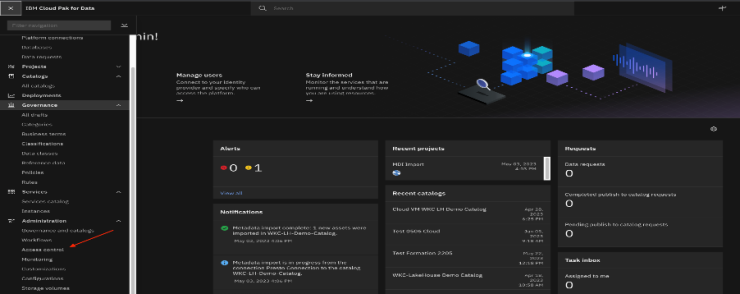
La solución incorpora un repositorio colaborativo donde se definen glosarios de términos, se documentan políticas de acceso y se registran reglas de calidad y protección de datos sensibles. Los flujos de trabajo integrados permiten a data stewards, analistas y responsables de negocio colaborar en la clasificación, validación y certificación de activos, garantizando el cumplimiento de normativas como GDPR, HIPAA o CCPA.
La plataforma integra flujos de trabajo colaborativos para definir y aplicar políticas de gobernanza, calidad y protección de datos. Incluye módulos para perfilar la calidad de los conjuntos de datos, detectar información sensible (PII), enmascarar valores y controlar accesos mediante reglas basadas en roles y atributos. Su funcionalidad de linaje visualiza el recorrido completo de cada dato, desde la fuente hasta los sistemas de consumo, ofreciendo trazabilidad y auditoría en tiempo real.
Watson Knowledge Catalog se despliega como servicio gestionado en IBM Cloud o sobre IBM Cloud Pak for Data en entornos on-premise y multicloud. Dispone de más de 30 conectores nativos y APIs abiertas que garantizan la interoperabilidad con bases de datos, data lakes, aplicaciones SaaS y herramientas de BI o IA. Su interfaz web, combinada con asistentes basados en IA, ofrece experiencias adaptadas a perfiles técnicos y de negocio, acelerando la adopción y el valor de los datos gobernados.
Funcionalidades de IBM Watson Knowledge Catalog
Descubrimiento y catálogo de metadatos
Watson Knowledge Catalog explora de forma continua fuentes de datos heterogéneas (bases relacionales, data lakes, objetos en la nube, ficheros compartidos y repositorios de BI) para extraer y consolidar metadatos técnicos y de negocio. Su motor de crawling automatiza la ingestión de esquemas, estructuras y definiciones, construyendo un repositorio indexado que permite búsquedas “Google-like” por términos de negocio, nombres de tablas o columnas. Gracias al análisis semántico, el catálogo sugiere agrupaciones de activos relacionados y ofrece una vista única del inventario de información, acelerando la identificación de conjuntos de datos relevantes para cualquier proyecto.
Clasificación y etiquetado automatizado
Incorpora algoritmos de machine learning y procesamiento de lenguaje natural para detectar y etiquetar automáticamente datos sensibles (PII, financieros, legales) y clasificarlos según taxonomías predefinidas o personalizadas. Cada activo recibe metadatos enriquecidos: nivel de sensibilidad, estatus de confidencialidad y categorías de negocio, lo que simplifica la aplicación de políticas de protección y la supervisión continua. Los resultados se ajustan y refinan mediante feedback de data stewards, mejorando progresivamente la precisión de la clasificación.
Perfilado y calidad de datos
Ofrece un módulo de perfilado que evalúa métricas clave como completitud, unicidad, consistencia y rangos de valores, generando reportes detallados de calidad y anomalías. Las reglas de validación pueden definirse para controlar formatos, detectar duplicados o verificar dependencias entre campos, y aplicarse de forma batch o en tiempo real. Cuando detecta discrepancias, dispara workflows de corrección automática o semiautomática (normalización, estandarización) y notifica a los responsables mediante dashboards centralizados.
Linaje de datos
Visualiza de extremo a extremo el recorrido de cada dato, desde su origen hasta los sistemas de consumo, incluyendo transformaciones ETL, flujos de streaming y agregaciones. Esta representación gráfica permite a los equipos trazar dependencias, evaluar el impacto de cambios de esquemas y acelerar la resolución de incidentes al identificar con rapidez cuellos de botella o puntos de fallo. Además, el linaje se versiona automáticamente, facilitando auditorías históricas y comparaciones ante revisiones regulatorias.
Gobernanza y políticas de datos
Permite modelar flujos de trabajo colaborativos para definir y aprobar políticas de gobernanza, reglas de negocio y glosarios de términos. Los data stewards y propietarios de datos gestionan catálogos de definiciones, asocian responsables y documentan actividades de certificación. Cada política cuenta con un historial de aprobaciones y rechazos, garantizando trazabilidad completa de las decisiones y facilitando el cumplimiento de normativas como GDPR, CCPA o ISO 27001.
Control de acceso y seguridad
Integra seguridad granular basada en roles (RBAC) y atributos (ABAC), de modo que los permisos se asignan según perfiles, etiquetas de sensibilidad y contexto de uso. Soporta autenticación SSO y se conecta con directorios corporativos (LDAP, Active Directory) para un aprovisionamiento centralizado. El cifrado en tránsito y en reposo, junto con el mascaramiento dinámico y la tokenización de datos sensibles, asegura que solo usuarios autorizados vean información crítica en entornos productivos o de prueba.
Integraciones y conectores
Dispone de más de 30 conectores nativos para bases de datos (DB2, Oracle, SQL Server), plataformas Big Data (Hadoop, Spark), servicios cloud (AWS S3, Azure Blob, Google Cloud Storage), aplicaciones SaaS (Salesforce, Workday) y herramientas de BI/IA (Tableau, Cognos, Watson Studio). Cada conector gestiona credenciales, optimiza volúmenes de transferencia y ofrece reconexión automática ante fallos. Su arquitectura plug-and-play minimiza la necesidad de escribir código, acelerando la conexión con nuevos orígenes y destinos de datos.
Personalización y APIs
Watson Knowledge Catalog expone un conjunto completo de APIs REST y SDKs en Python y Java para automatizar tareas de catalogación, etiquetado y gobernanza desde pipelines CI/CD o scripts personalizados. Esto permite integrar el catálogo con plataformas de orquestación (Airflow, Databricks), frameworks de machine learning y portales de data observability. Además, facilita la creación de extensiones y hooks para adaptar flujos de trabajo al ciclo de vida de datos propio de cada organización.
Reseña Técnica de IBM Watson Knowledge Catalog
IBM Watson Knowledge Catalog constituye una plataforma integral de gobernanza de datos enfocada en automatizar el descubrimiento, la catalogación, la protección y el linaje de los activos de información. Construida sobre el núcleo de IBM Cloud Pak for Data, adopta una arquitectura modular con despliegues contenedorizados que facilitan la escala horizontal en entornos on‑premise, multicloud o híbridos. Su diseño pone el énfasis en la interoperabilidad mediante APIs REST y conectores preconfigurados, lo que garantiza una integración fluida dentro de los ecosistemas de datos existentes.
La capacidad de descubrimiento inteligente recorre de forma continua fuentes heterogéneas —bases relacionales, data lakes, sistemas SaaS y pipelines de streaming— para extraer metadatos técnicos y de negocio. Emplea algoritmos de machine learning que identifican patrones en nombres, descripciones y contenido, enriqueciendo cada activo con etiquetas de clasificación y recomendaciones semánticas. Esta automatización reduce notablemente el esfuerzo manual y mantiene el catálogo actualizado ante modificaciones en los sistemas de origen.
El repositorio de metadatos centraliza información técnica, operativa y semántica en una única vista, incluyendo glosarios de términos, descripciones de negocio y atributos de sensibilidad. Las búsquedas facetadas y la navegación por taxonomías corporativas facilitan la localización de activos, mientras que la funcionalidad de versionado permite comparar historiales y restaurar configuraciones previas en auditorías o pruebas de regresión.
Mediante su motor de linaje, los usuarios acceden a representaciones gráficas interactivas que trazan el recorrido de cada dato desde su origen hasta los sistemas de consumo. Las visualizaciones detallan transformaciones batch y streaming, dependencias entre flujos ETL/ELT y puntos de impacto de cambios en esquemas, facilitando el análisis de riesgos y la depuración de errores en procesos complejos.
El módulo de calidad de datos proporciona perfiles configurables para medir exactitud, completitud, consistencia y unicidad. Reglas de validación automatizadas y workflows de excepción derivan los registros fuera de norma hacia procesos de corrección, mientras que los dashboards de métricas ofrecen visibilidad continua sobre tendencias y desviaciones críticas.
Las políticas de protección de datos sensibles aplican enmascaramiento dinámico, tokenización y cifrado selectivo sin duplicar información, ajustando el nivel de detalle según roles, contextos de consulta o entornos de ejecución. Cada acceso queda registrado en pistas de auditoría inmutables, cubriendo normativas como GDPR, HIPAA o CCPA.
Finalmente, los workflows colaborativos orquestan la certificación de activos, la aprobación de glosarios y la asignación de responsabilidades entre data stewards y analistas. Esta capa de gobernanza activa fomenta la alineación entre áreas de negocio y TI, impulsa la trazabilidad y consolida una cultura de datos confiable dentro de la organización.
Fortalezas y Debilidades
|
Fortalezas |
Debilidades |
|
Repositorio centralizado de metadatos que unifica activos estructurados y no estructurados. |
Curva de aprendizaje pronunciada para administradores y data stewards sin experiencia previa. |
|
Clasificación y etiquetado automatizado mediante machine learning y NLP. |
Coste de licenciamiento elevado y complejidad en la estimación de costes. |
|
Visualización de linaje completo con trazabilidad de extremo a extremo. |
Dependencia del ecosistema IBM, lo que puede dificultar integraciones con soluciones ajenas. |
|
Flujos de trabajo colaborativos para definir políticas y glosarios de negocio. |
Interfaz con menús y opciones avanzadas que pueden resultar abrumadores en grandes implementaciones. |
|
Más de 30 conectores nativos y APIs abiertas que facilitan la interoperabilidad. |
Rendimiento susceptible a degradarse en catálogos de gran volumen si no se ajusta infraestructura. |
|
Despliegue gestionado multicloud u on-premises sobre IBM Cloud Pak for Data. |
Personalización avanzada requiere conocimientos técnicos y desarrollo de scripts o SDKs. |
|
Integración nativa con la plataforma watsonx y otros servicios de IA de IBM. |
Documentación dispersa entre IBM Cloud, Cloud Pak for Data y repositorios específicos y soporte multilingüe limitado en documentación y comunidad |
|
Políticas de seguridad granular (RBAC, ABAC), cifrado en tránsito y reposo. |
Detección automática de PII puede generar falsos positivos o requerir ajustes manuales. |
Licenciamiento e instalación
IBM Watson Knowledge Catalog se comercializa bajo un modelo de suscripción con tarifas basadas en el volumen de datos catalogados, el número de usuarios y los módulos activados, ofreciendo también opciones de licencia perpetua con contratos de mantenimiento anuales. Su perfil de cliente ideal abarca empresas medianas y grandes que dispongan de equipos dedicados a la gestión de datos y requieran capacidades avanzadas de gobernanza y cumplimiento normativo; las pymes pueden encontrar su inversión y complejidad menos ajustadas a necesidades más básicas.
En cuanto al tipo de instalación, la solución permite desplegarse como SaaS gestionado en IBM Cloud Pak for Data, en entornos on‑premise sobre infraestructura propia o en configuraciones híbridas/multicloud, adaptándose a diferentes estrategias de modernización y migración de datos.
Referencias
- Página oficial de IBM Watson Knowledge Catalog: IBM Knowledge Catalog