Alation Agentic Data Intelligence Platform
Alation Agentic Data Intelligence PlatformAlation Agentic Data Intelligence Platform es una solución empresarial diseñada para centralizar y unificar todos los activos de datos de una organización en un único repositorio de metadatos. Su núcleo de “metadatos activos” automatiza la ingesta y actualización continua desde orígenes heterogéneos —bases de datos relacionales, data warehouses, sistemas de BI, pipelines ETL y archivos—, generando un catálogo siempre sincronizado con el estado real de los datos.
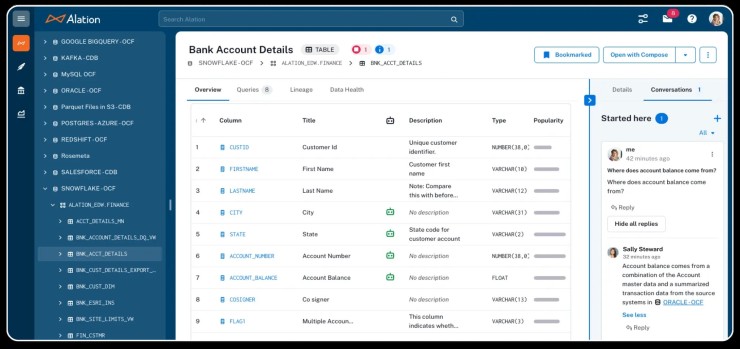
El módulo de Data Governance Policy Center ofrece un control granular de acceso y cumplimiento normativo: permite definir políticas basadas en roles (RBAC) y atributos (ABAC) aplicables a nivel de catálogo, base de datos, tabla e incluso columna. Estas reglas se integran con directorios de identidad (Active Directory, Okta), habilitan enmascaramientos dinámicos y trazabilidad de cambios, y facilitan la adhesión a normativas como GDPR o CCPA. Al mismo tiempo, el glosario de negocio vincula términos técnicos con definiciones corporativas, unificando lenguaje y criterios de uso.
Para soportar auditorías y análisis de impacto, Alation incluye un sistema de lineage automatizado que visualiza end-to-end el flujo de datos y sus transformaciones a nivel columna, y un motor de calidad que monitoriza métricas (completitud, unicidad, tendencias de error) en tiempo real. Además, su capa colaborativa permite gestionar comentarios, solicitudes de acceso y valoraciones directamente sobre cada activo, fomentando la responsabilidad compartida. Gracias a su arquitectura API-first y al Open Connector Framework, la plataforma se adapta tanto a entornos on-premise como cloud, facilitando la extensión y automatización de flujos de trabajo.
Funcionalidades principales de Alation Data Intelligence Platform
Catalogación activa de metadatos
Alation centraliza y consolida el contexto de todos los activos de datos en un repositorio dinámico denominado Active Metadata Graph. Cada vez que se producen cambios en estructuras (tablas, vistas, esquemas) o se generan nuevos artefactos en herramientas de BI y pipelines ETL, el sistema ingiere y actualiza automáticamente los metadatos sin intervención manual. Esto garantiza un catálogo siempre sincronizado con el entorno real, facilita la comprensión de las relaciones entre objetos y sirve como base para todas las demás funcionalidades de la plataforma.
Búsqueda y descubrimiento inteligente
El motor de Search and Discovery permite a cualquier usuario localizar activos mediante texto libre, filtros avanzados (propietario, sensibilidad, etiquetas) o consultas en lenguaje natural. Su tecnología semántica sugiere términos, facetas dinámicas y relevancia basada en patrones de uso, reduciendo el “data paralysis” y acelerando el acceso a la información que realmente importa para análisis y toma de decisiones.
Centro de políticas de gobernanza de datos
Data Governance Policy Center ofrece un entorno centralizado para definir, aplicar y auditar políticas de acceso y cumplimiento. Soporta modelos de control basados en roles (RBAC) y atributos (ABAC) a nivel de catálogo, base de datos, tabla o columna; integra enmascaramientos dinámicos y se conecta con proveedores de identidad como Active Directory u Okta. Esto facilita la adhesión a regulaciones como GDPR, CCPA y normativas internas de seguridad.
Trazabilidad y lineage de datos
El módulo Data Lineage genera de forma automática mapas visuales de flujo de datos end-to-end, detallando transformaciones y dependencias a nivel de columna. Los usuarios pueden explorar rutas upstream y downstream, identificar puntos de fallo potenciales y evaluar el impacto de cambios antes de ejecutarlos, lo que resulta clave para auditorías, migraciones y refactorizaciones de pipeline.
Monitorización y calidad de datos
A través de Data Quality, la plataforma prioriza de manera proactiva las métricas de fiabilidad (completitud, unicidad, valores nulos) e integra frameworks externos como Great Expectations o Deequ. Las validaciones se ejecutan en tiempo real, generando alertas y reportes consolidados que permiten corregir desviaciones y mantener la confianza en los datos usados por analistas y aplicaciones de IA.
Data Products Marketplace
Este módulo ofrece un espacio para empaquetar, certificar y distribuir “productos de datos” reutilizables (datasets enriquecidos, dashboards, modelos). Cada producto incluye metadatos, políticas de acceso y métricas de uso, lo que agiliza su adopción, fomenta la reutilización y garantiza que los consumidores trabajen siempre con artefactos validados y gobernados.
Métricas de uso y analítica integrada
La sección Analytics mide el rendimiento de las iniciativas de datos mediante indicadores como número de activos curados, usuarios activos, consultas top y tiempos de respuesta. Estos dashboards de seguimiento permiten alinear la madurez de la cultura de datos con objetivos de negocio, priorizar esfuerzos de curation y demostrar retorno de inversión en proyectos de gobernanza y analítica.
Agentes de IA y automatización asistida
Alation Agents, potenciado por ALLIE AI, automatiza tareas críticas: generación de documentación, propuesta de descripciones y stewards, despliegue de reglas de calidad y creación de data products. Estos “agentes” combinan machine learning y validación humana para escalar operaciones de gobernanza, reduciendo tiempos de curación y liberando a los equipos para actividades de mayor valor estratégico.
Arquitectura abierta y extensibilidad
La plataforma se fundamenta en un Open Connector Framework y Open Data Quality Framework que facilitan el desarrollo de conectores personalizados y la integración con herramientas de observabilidad. Además, sus APIs RESTful, webhooks y AI Agent SDK en Python permiten orquestar flujos de trabajo, generar informes automáticos y acoplar Alation sin fricciones en entornos on-premise o cloud híbrido.
Automatización de flujos de trabajo
Workflow Automation habilita la programación de procesos de gobernanza y curation mediante disparadores y acciones configurables. Desde solicitudes de acceso hasta aprobación de políticas o notificaciones en herramientas de DevOps, esta funcionalidad garantiza procesos repetibles, trazables y alineados con SLAs internos, optimizando la eficiencia operativa y la colaboración interequipos.
Seguridad y cumplimiento
La capa de Security gestiona cifrado, autenticación multifactor y auditorías detalladas del uso de datos. Integra controles de prevención de pérdida (DLP), registros de acceso y herramientas de análisis de anomalías, asegurando protección continua y facilitando la demostración de cumplimiento ante auditorías internas y organismos reguladores
Reseña técnica de Alation Data Intelligence Platform
Alation Data Intelligence Platform es una plataforma de gestión de metadatos y gobierno de datos potenciada por IA, encargada de automatizar la catalogación, el linaje y la calidad de la información. Su Active Metadata Graph unifica activos provenientes de múltiples fuentes en un grafo activo, mientras su motor de aprendizaje automático genera descripciones y recomendaciones que mantienen el inventario siempre actualizado.
La ingesta automatizada conecta más de 60 sistemas —almacenes de datos, herramientas de BI, ETL y repositorios de código—, normaliza esquemas y estadísticas de uso, y consolida todo en un catálogo central. Esta capacidad elimina la labor manual de descubrimiento y asegura que cada cambio en los activos quede reflejado en tiempo real.
El Active Metadata Graph revela relaciones implícitas entre tablas, pipelines y dashboards, destacando dependencias que de otro modo resultarían invisibles. Gracias a este grafo activo, los equipos identifican rápidamente rutas de datos críticas y evitan silos de información.
La búsqueda inteligente admite preguntas en lenguaje natural y sintaxis SQL, combinadas con filtros dinámicos por propietario, sensibilidad o popularidad. Esta funcionalidad agiliza la localización de recursos y reduce la duplicidad de esfuerzos en entornos con altos volúmenes de activos.
El Data Governance Policy Center centraliza la definición de políticas RBAC y ABAC, con posibilidad de enmascaramiento y retención de datos a nivel de columna. Los administradores programan revisiones de certificación y generan informes de cumplimiento para normativas como GDPR, HIPAA o CCPA.
El módulo de linaje extrae automáticamente dependencias a partir de scripts SQL y flujos de ETL, mostrando visualizaciones upstream y downstream a nivel de columna. Esta trazabilidad facilita auditorías, análisis de impacto y planificación de migraciones sin interrumpir procesos productivos.
La colaboración social integra comentarios, valoraciones y asignación de stewards, además de notificaciones automáticas que se sincronizan con Slack, Teams o Jira. De este modo, se fomenta la responsabilidad compartida y se acelera la toma de decisiones entre analistas, ingenieros y responsables de negocio.
La monitorización de calidad de datos, en conjunto con frameworks como Great Expectations, proporciona alertas ante desviaciones en completitud, duplicados o patrones atípicos. Los resultados se reflejan en dashboards consolidados, impulsando la mejora continua de la fiabilidad de los datos.
Las APIs RESTful y el SDK en Python permiten automatizar tareas, generar informes personalizados y crear conectores a sistemas propietarios. Los webhooks habilitan la orquestación de eventos en herramientas de DevOps y sistemas de tickets, garantizando una integración fluida en arquitecturas heterogéneas.
Fortalezas y Debilidades de Alation Data Catalog
| Fortalezas | Debilidades |
|---|---|
| Active Metadata Graph: Grafo dinámico que revela dependencias implícitas entre activos de datos. | Coste elevado: Modelo de licenciamiento SaaS puede resultar prohibitivo para pymes o equipos pequeños. |
| Automatización con IA: Generación automática de descripciones, sugerencias y relaciones de metadatos. | Curva de aprendizaje: Configuración de políticas avanzadas y ajustes del grafo requieren conocimientos expertos. |
| Búsqueda en lenguaje natural: Permite consultas intuitivas y filtros dinámicos basados en contexto. | Dependencia de conectores nativos: Para sistemas muy específicos puede ser necesario desarrollar integraciones a medida. |
| Data Governance Policy Center: Políticas centralizadas RBAC/ABAC con enmascaramiento a nivel de columna. | Requisitos de infraestructura: Las opciones on‑premises demandan recursos y operaciones de TI dedicados. |
| Integraciones extensas: Conexiones out‑of‑the‑box con BI, ETL, repositorios de código y herramientas de calidad. | Operativa offline limitada: Sin conectividad a las fuentes, funciones de descubrimiento y linaje quedan restringidas. |
| Capa colaborativa con comentarios, valoraciones y solicitudes de acceso integrados en cada activo | Configuración y personalización de políticas compleja en entornos muy heterogéneos |
Licenciamiento y utilización
En cuanto al licenciamiento, Alation Agentic Data Intelligence Platform se comercializa bajo un modelo de suscripción (SaaS) con tarifas modulables según número de usuarios, volumen de metadatos y nivel de soporte, ofreciendo contratos anuales o plurianuales; adicionalmente, existen licencias perpetuas para despliegues on‑premises.
Respecto al tamaño de empresa, la solución se adapta principalmente a medianas y grandes organizaciones con equipos de datos consolidados y elevados requisitos de gobierno, aunque su arquitectura modular permite también implementaciones en proyectos departamentales de menor escala.
En materia de tipo de instalación, Alation funciona sobre todo como servicio en la nube gestionado por el proveedor, garantizando actualizaciones continuas y alta disponibilidad; para entornos con estrictas políticas de seguridad o normativas específicas, ofrece además despliegues on‑premises o en nubes privadas (AWS, Azure, GCP) dentro de infraestructuras dedicadas.
Referencias
Página oficial de Alation Data Intelligence Platform: Alation Agentic Data Intelligence Platform