
Alex es la plataforma de metadatos de Alex Solutions diseñada para centralizar y automatizar la gobernanza de datos empresariales mediante inteligencia artificial. Proporciona un punto único de verdad al gestionar catálogos de datos, linaje automatizado, calidad integrada y glosario de negocio inteligente. Su arquitectura híbrida soporta despliegues on-premise y en la nube.
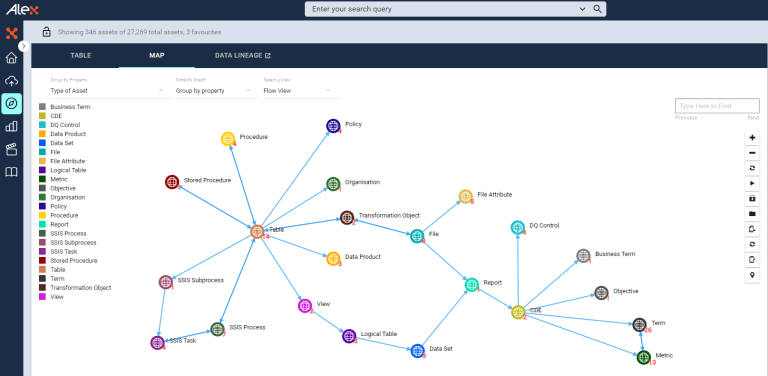
La solución incluye un catálogo aumentado con búsqueda avanzada y vistas gráficas, un seguimiento de linaje de datos que mapea flujos en tiempo real entre sistemas, y controles de calidad que validan y emiten alertas de anomalías. Dispone de un glosario de negocio colaborativo y flujos de trabajo de data stewardship, así como un módulo de Data Risk & Compliance para aplicar políticas de acceso, clasificación y privacidad. Su componente Active Data Governance automatiza la aplicación de normativas y habilita la remediación de incumplimientos, mientras que los conectores inteligentes simplifican la ingestión de datos sin programación.
Con un enfoque AI-first, Alex reduce la dependencia de código ofreciendo personalización sin programación y explicaciones de transformaciones en lenguaje natural. Integra detección de anomalías basada en machine learning y un grafo de conocimiento empresarial que enriquece las relaciones entre activos de datos. Además, garantiza reporting con auditorías y versiones históricas de metadatos, promoviendo la colaboración entre equipos de TI y negocio y el cumplimiento de reglamentaciones como GDPR o AML desde un entorno unificado.
Funcionalidades de Alex para la gobernanza de datos
Catálogo de datos inteligente
Alex ofrece un catálogo centralizado que indexa automáticamente todos los activos de datos de la organización, enriqueciendo los metadatos con tags contextuales y descripciones generadas por IA. Incorpora vistas gráficas interactivas y una búsqueda semántica que permite a los usuarios localizar conjuntos de datos mediante términos de negocio o atributos técnicos. El catálogo facilita la documentación colaborativa y soporta taxonomías y ontologías personalizadas, garantizando que cada activo esté alineado con los estándares corporativos de nomenclatura y clasificación.
Linaje de datos en tiempo real
El seguimiento de linaje de Alex mapea dinámicamente el flujo de información desde su origen hasta los sistemas destino, mostrando transformaciones, joins y puntos de fusión en diagramas navegables. Gracias a su integración con conectores inteligentes, actualiza este linaje en tiempo real ante cambios en pipelines o esquemas, lo que acelera la identificación de cuellos de botella y errores. Los usuarios pueden profundizar en nodos específicos para analizar trazabilidad, tiempos de procesamiento y dependencias entre activos, facilitando auditorías y diagnósticos.
Control de calidad de datos
El módulo de calidad de datos de Alex permite definir reglas de validación tanto simples (valores nulos, formatos) como complejas (coherencia referencial, validaciones cruzadas). Emplea perfiles automáticos que analizan patrones estadísticos y distribuciones para detectar anomalías y tendencias atípicas. Cuando se superan umbrales predefinidos, genera alertas proactivas e informes detallados que los equipos de datos pueden programar periódicamente. Asimismo, ofrece dashboards de evolución de la calidad e historiales de limpieza y corrección para medir el impacto de las acciones de mejora.
Glosario de negocio y data stewardship
Alex integra un glosario de negocio colaborativo donde los usuarios definen términos clave, KPIs y métricas con sus sinónimos y descripciones en lenguaje natural. Este glosario se enlaza automáticamente con los activos del catálogo para facilitar la comprensión por parte de stakeholders no técnicos. Los workflows de data stewardship gestionan solicitudes de cambio, aprobaciones y asignación de responsabilidades, permitiendo auditorías de quién, cuándo y por qué se actualizó cada definición.
Módulo de Data Risk & Compliance
El componente de gestión de riesgos y cumplimiento clasifica automáticamente la información según nivel de sensibilidad, regulaciones (GDPR, HIPAA, AML) y políticas internas. Ofrece plantillas de reglas de privacidad que se pueden personalizar para detectar datos personales o críticos, y dispara flujos de remediación guiados cuando se identifican brechas. Las políticas se aplican a nivel de catálogo y linaje, garantizando que el acceso, la encriptación y la retención cumplan con los marcos regulatorios vigentes.
Active Data Governance
Active Data Governance es el motor de automatización de políticas de Alex: ejecuta reglas programadas que corrigen desviaciones, notifica a los responsables y reconstruye procesos de ingestión si se incumplen estándares. Esta capa orquesta tareas de limpieza, enmascaramiento y validación sin necesidad de intervención manual, reduciendo la carga operativa de los equipos de TI. Además, registra cada acción en un log de auditoría inmutable, proporcionando prueba de gobernanza y facilitando inspecciones externas.
Conectores inteligentes
La plataforma incluye conectores plug-and-play para bases de datos relacionales, almacenes en la nube, APIs REST, sistemas ERP/CRM y formatos de archivos planos. Cada conector detecta automáticamente cambios en esquemas y tipos de datos, adaptando pipelines sin romper operaciones en curso. Gracias a bibliotecas de adaptadores preconstruidos y un framework de desarrollo, los usuarios pueden crear extensiones personalizadas para tecnologías emergentes con mínimo esfuerzo.
Detección de anomalías basada en machine learning
Alex incorpora algoritmos de aprendizaje automático entrenados sobre patrones históricos para identificar outliers y desviaciones en volúmenes, frecuencia o calidad de datos. Cuando detecta comportamientos inusuales —como picos de duplicados o valores fuera de rango— envía alertas tempranas y sugiere posibles causas. Los modelos de ML se reentrenan periódicamente, ajustando umbrales dinámicos y reduciendo falsos positivos a medida que evolucionan los flujos de datos.
Grafo de conocimiento empresarial
El grafo de conocimiento de Alex representa entidades de negocio, relaciones y procesos como nodos conectados, enriquecidos con metadatos técnicos y semánticos. Esta estructura posibilita consultas avanzadas que combinan lógica de grafos y SQL, revelando dependencias ocultas y sinergias entre datos dispares. Los stewards pueden explorar rutas de impacto y proponer nuevas relaciones, lo que impulsa la innovación en análisis y descubrimiento de insights.
Reporting y auditorías de metadatos
La plataforma genera reportes personalizables que incluyen métricas de uso, calidad, cumplimiento y cambios en metadatos a lo largo del tiempo. Dispone de un repositorio de versiones históricas que permite comparar estados anteriores y restaurar definiciones o configuraciones previas. Los registros de auditoría documentan todas las actividades de usuarios y ejecuciones automáticas, proporcionando evidencia completa para auditorías internas o externas.
Reseña técnica de las características de Alex
Alex Solutions presenta una plataforma modular destinada a optimizar el ciclo de vida de los metadatos y garantizar el cumplimiento normativo en entornos híbridos y multinube. Su arquitectura aprovecha técnicas de automatización y machine learning para ofrecer visibilidad completa sobre fuentes de datos, flujos de transformación y políticas de acceso.
En el ámbito del descubrimiento automático, Alex detecta nuevas tablas, vistas y archivos en repositorios on-premise o en la nube, obteniendo perfiles estadísticos —distribuciones, valores nulos y outliers— sin intervención manual gracias a conectores preconfigurados.
La catalogación avanzada implementa un repositorio centralizado de metadatos que agrupa descripciones de campo, definiciones de negocio y contactos responsables. Las reglas personalizables permiten clasificar elementos según sensibilidad, criticidad o línea de producto, manteniendo actualizado el catálogo a medida que evolucionan los esquemas.
Los agentes de IA integrados abordan dos grandes vertientes: clasificación automática de información sensible (PII, datos financieros, registros de salud) y detección de anomalías. El primero aplica políticas de privacidad (GDPR, HIPAA) al inspeccionar patrones de datos, mientras que el segundo crea alertas al identificar desviaciones en métricas de calidad, reduciendo tiempos de resolución y evitando impactos en downstream.
El linaje de datos documenta paso a paso las transformaciones —uniones, agregaciones, filtrados— desde la ingestión hasta la visualización, posibilitando análisis de impacto en tiempo real. Cuando un origen sufre modificaciones, los responsables reciben notificaciones inmediatas con rutas afectadas.
El grafo de conocimiento enlaza activos, procesos y usuarios en un modelo semántico navegable: desde un campo de base de datos hasta los dashboards que lo consumen, pasando por los propietarios y las políticas aplicables.
La sección de gobierno integrado aúna políticas de acceso, flujos de aprobación y métricas de calidad en un único panel de control. Administradores definen umbrales que, al cruzarse, disparan acciones automáticas —bloqueos, notificaciones o correcciones paramétricas— sin necesidad de codificar scripts externos.
Por último, la capa de conectividad incluye APIs REST y webhooks capaces de sincronizar metadatos con plataformas de orquestación (Airflow, Azure Data Factory), herramientas de BI (Power BI, Tableau, Looker) y sistemas de gestión de identidad (IAM, DLP).
Fortalezas y debilidades de Alex
| Fortalezas | Debilidades |
|---|---|
| Automatización del descubrimiento y perfilado de datos en múltiples orígenes, reduciendo el esfuerzo manual. | Curva de aprendizaje inicial pronunciada, sobre todo en entornos con metadatos muy personalizados o fragmentados. |
| Agentes de IA adaptativos para clasificación de datos sensibles y detección de anomalías, que mejoran con el uso y la definición de políticas. | Dependencia de la calidad de los datos de entrenamiento; pueden producirse falsos positivos o negativos si los datasets de referencia son pobres. |
| Linaje de datos en tiempo real, que facilita auditorías, análisis de impacto y mejora la trazabilidad de los procesos. | La visualización del linaje muy complejo puede resultar sobrecargada en infraestructuras de datos de gran escala. |
| Grafo de conocimiento empresarial que conecta activos, procesos y responsables, fomentando la colaboración entre áreas. | Requiere una fase de configuración manual para mapear relaciones semánticas específicas del negocio. |
| Modelo de licencia con coste anual fijo y sin cargos por usuario, que asegura previsibilidad presupuestaria y escalabilidad. | Funcionalidades avanzadas (p. ej. webhooks en tiempo real) pueden requerir desarrollo adicional para integrarse con sistemas legacy. |
| Integraciones nativas con orquestadores (Airflow, ADF), BI (Tableau, Power BI, Looker) y sistemas de seguridad (IAM, DLP), garantizando coherencia. | Algunas integraciones específicas pueden llegar a carecer de conectores out-of-the-box, necesitándose conector custom. |
| Panel de gobernanza unificada con flujos de aprobación, métricas de calidad y alertas automáticas, todo en un único punto de control. | La gestión centralizada puede resultar excesiva para equipos pequeños o proyectos con necesidades de gobernanza ligeras. |
Licenciamiento e instalación de Alex
Alex Solutions se distribuye bajo un modelo de licenciamiento anual fijo sin cargos adicionales por usuario, lo que lo convierte en una opción predecible para presupuestos corporativos; está orientado a empresas medianas y grandes que requieren robustez y escalabilidad en sus procesos de gobernanza de datos; y ofrece opciones de instalación on-premise, en la nube o en entornos híbridos, adaptándose tanto a infraestructuras ya existentes como a estrategias de modernización basadas en servicios cloud.
Referencias
Página oficial de Alex Solutions: Alex - AI Metadata Platform for Data Governance & Automation
- Printer-friendly version
- Log in to post comments
