
La plataforma data.world centraliza la gobernanza de datos en un entorno nativo en la nube, facilitando el descubrimiento, la gestión y la colaboración sobre activos de información. Su diseño API-first y arquitectura multitenant garantizan escalabilidad y alta disponibilidad sin necesidad de infraestructura local. Gracias a esta arquitectura y su compatibilidad con múltiples orígenes, data.world facilita la unificación de metadatos y la creación de un repositorio de conocimiento compartido que consolida tanto datos técnicos (esquemas, tablas, columnas) como contexto de negocio (glosarios, definiciones, políticas).
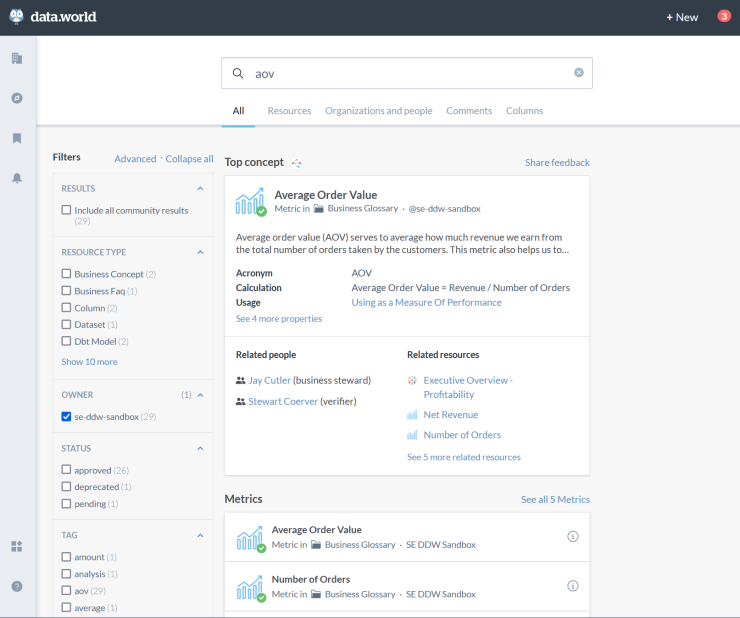
En el núcleo de la solución, un gráfico de conocimiento alimenta un catálogo de metadatos que modela relaciones entre bases de datos, tablas, informes y términos de negocio. La búsqueda semántica interpreta sinónimos y contexto, mientras que el linaje visual muestra rutas interactivas desde el origen hasta el consumo de cada dato. Estas capacidades mejoran la transparencia, detectan duplicidades y elevan la calidad de la documentación.
Para reforzar el cumplimiento,data.world incorpora perfilado automático de calidad y clasificación de datos sensibles, señalando de forma proactiva riesgos de privacidad. Los flujos de trabajo definen políticas de acceso, certificación de activos y aprobación de cambios, con auditorías detalladas. Además, un motor de IA contextual y APIs REST permiten asistentes virtuales y extensiones personalizadas, impulsando la adopción de analítica guiada.
Funcionalidades de data.world
Catálogo de metadatos basado en gráfico de conocimiento
data.world adopta un modelo metadata-first potenciado por un gráfico de conocimiento, unificando todos los activos de datos—almacenes, tablas, vistas y dashboards—en un único repositorio enriquecido con etiquetas, annotations y términos de negocio. Esta representación semántica facilita la navegación interactiva, la identificación de duplicidades y la detección de vacíos en la documentación, garantizando que el catálogo refleje siempre el estado real de la organización gracias a conectores nativos que actualizan metadatos de forma continua.
Búsqueda semántica inteligente
El motor de búsqueda aplica facetas inteligentes, sinónimos y contexto relacional para ofrecer resultados relevantes más allá de la coincidencia literal de texto. Las consultas priorizan activos certificados, frecuentemente usados o clasificados como sensibles, lo que reduce drásticamente el tiempo de descubrimiento y mejora la autonomía de analistas y científicos de datos al convertir cada búsqueda en una experiencia precisa y amigable.
Colecciones y organización de activos
Las colecciones actúan como catálogos locales que agrupan recursos por dominio, proyecto o unidad de negocio. Cada colección permite asignar stewards, aplicar etiquetas y definir niveles de acceso, ofreciendo una capa de gobernanza focalizada que acelera la colaboración en equipos específicos y mantiene el catálogo global ordenado y manejable.
Flujos de curado y enriquecimiento
La plataforma mezcla automatización y revisión humana a través de workflows colaborativos. Los curadores asignan stewards, anotan recursos con términos del glosario, tags y clasificaciones, y marcan activos como certificados, en revisión o obsoletos. Este enfoque híbrido asegura que solo los datos validados lleguen a producción, mientras se mide la completitud y consistencia de los metadatos a lo largo del tiempo.
Glosario de negocio colaborativo
El business glossary centraliza definiciones, sinónimos, jerarquías y relaciones de términos críticos (por ejemplo, ARR, Churn Rate), asignando propietarios y fechas de revisión. Integrado al gráfico de conocimiento, el glosario enriquece la búsqueda y garantiza un lenguaje común entre equipos técnicos y de negocio, reduciendo ambigüedades en la interpretación de métricas y KPIs.
Conectividad e integración de fuentes de datos
Gracias a conectores nativos, pipelines de ingesta y APIs REST, data.world automatiza la extracción de metadatos de almacenes en la nube, bases relacionales y herramientas de BI. SDKs para Python y Java permiten crear flujos personalizados, mientras que la sincronización continua asegura la cobertura total de nuevos activos sin replicación de datos ni infraestructura adicional.
Visualización de linaje de datos
El módulo Eureka Explorer genera diagramas de linaje interactivos que trazan el recorrido de cada dato desde su origen hasta su consumo. Los usuarios pueden filtrar por flujo de trabajo, transformación o responsable, facilitando la detección de cuellos de botella en pipelines, la preparación de auditorías y el análisis de impacto de cambios en tiempo real.
Perfilado automático y clasificación de datos sensibles
Mediante modelos de detección de patrones y reglas configurables, la plataforma analiza métricas de calidad (completitud, unicidad, outliers) y etiqueta proactivamente datos regulados o personales. Esta capacidad de sensitive data discovery permite definir políticas de acceso diferenciadas y generar alertas tempranas ante riesgos de privacidad o incumplimientos normativos.
Flujos de trabajo de gobernanza y automatización de políticas
Con el lema “Govern Automate with confidence”, data.world ofrece workflows que integran aprobación de cambios, certificación de activos y escalado de incidencias basados en roles y sensibilidad. Cada acción queda registrada en un log de auditoría completo, reduciendo la carga operativa y asegurando una gobernanza consistente a gran escala.
Motor de IA contextual
El AI Context Engine fusiona el gráfico de conocimiento con modelos de lenguaje avanzados para responder consultas en lenguaje natural, alimentar asistentes virtuales internos y generar dashboards que sugieren insights basados en correlaciones. Cada recomendación se acompaña de trazabilidad y contexto de negocio, reforzando la confianza de los usuarios en la analítica asistida por IA.
Reseña técnica de características
Data.world es una plataforma integral de gobernanza de datos en la nube que facilita la unificación de metadatos, la colaboración y el control de calidad en organizaciones de cualquier tamaño. Gracias a su arquitectura multiinquilino, dispone de un repositorio centralizado donde se catalogan activos provenientes de bases de datos relacionales, lagos de datos y almacenes analíticos, todo en una única interfaz web.
En cuanto al catálogo de datos, la solución constituye un inventario dinámico que indexa tanto metadatos técnicos (esquemas, relaciones, tipos de datos) como de negocio (definiciones, propietarios, acuerdos de nivel de servicio). Los usuarios disponen de una navegación jerárquica por proyectos y etiquetas, con capacidades de autocompletar basadas en glosario corporativo, lo que minimiza la duplicación de esfuerzos y garantiza la coherencia semántica en toda la empresa.
El linaje automático aporta trazabilidad visual de extremo a extremo: desde el origen en un sistema OLTP o en un lago de datos hasta la generación de informes en Power BI o Dashboards en Tableau. Al mapear transformaciones, agregaciones y conexiones entre tablas, permite diagnosticar rápidamente el impacto de cualquier modificación en los procesos ETL, reduciendo tiempos de investigación en auditorías o investigaciones de calidad.
Con el módulo de calidad de datos, los administradores definen reglas de validación (chequeo de valores nulos, rangos, patrones de formato) que se ejecutan en pipelines programados o en tiempo real. Cuando detectan desviaciones, el sistema dispara alertas configurables y genera informes con métricas históricas de cumplimiento, así que los responsables pueden anticiparse a incidencias antes de que los datos lleguen a entornos productivos.
Para potenciar la colaboración, cada activo incorpora un espacio de discusión y anotaciones vinculadas, junto a un sistema de tickets para solicitud de nuevos conjuntos o modificaciones de definiciones. De esta manera, ingenieros de datos, analistas y equipos de negocio interactúan directamente sobre los metadatos, agilizando ciclos de feedback y evitando cuellos de botella.
La API REST de data.world y sus conectores nativos con herramientas como Informatica, Talend, Snowflake o Power BI permiten orquestar integraciones bidireccionales. Así, los pipelines ETL pueden sincronizar automáticamente esquemas y linaje, mientras que las plataformas de BI importan metadatos y métricas de calidad sin necesidad de desarrollos ad hoc.
Finalmente, el modelo de seguridad incluye permisos granulares basados en roles y políticas que cubren lectura, escritura y aprobación a nivel de proyecto o entidad. Un registro de auditoría documenta todas las acciones de los usuarios (quién, cuándo y qué), facilitando el cumplimiento de normativas como GDPR, CCPA o SOX y ofreciendo transparencia total sobre la gestión de datos.
Fortalezas y debilidades de data.world
| Fortalezas | Debilidades |
|---|---|
| Catálogo centralizado de metadatos técnicos y de negocio que elimina silos de información. | Curva de aprendizaje inicial pronunciada para usuarios sin experiencia en data governance. |
| Linaje automático que ofrece trazabilidad visual de extremo a extremo y acelera auditorías. | Coste de suscripción elevado para organizaciones de tamaño medio o pequeño. |
| Módulo de calidad de datos con reglas configurables y alertas en tiempo real. | Dependencia de la conectividad a la nube; puede presentar latencias con bajo ancho de banda. |
| Espacios de colaboración y anotaciones integrados que agilizan la comunicación entre equipos. | Personalización avanzada de flujos de trabajo y dashboards limitada sin desarrollar sobre la API. |
| Conectores nativos y API REST que facilitan la integración con BI, ETL y data warehouses. | Gestión de grandes volúmenes de metadatos puede requerir optimizaciones adicionales. |
| Seguridad granular y registro de auditoría que soporta normativas como GDPR o CCPA. | Interfaz potencialmente sobrecargada en entornos con múltiples proyectos y usuarios simultáneos. |
| Escalabilidad inherente de la arquitectura multiinquilino, sin necesidad de infra on-premise. | Limitaciones en el versionado histórico de definiciones de glosario y metadatos. |
Licenciamiento e instalación
En cuanto a licenciamiento, data.world se ofrece bajo un modelo de suscripción por usuario o por capacidad de datos gestionados, con planes que van desde una versión gratuita limitada (freemium) hasta acuerdos empresariales adaptados a necesidades avanzadas. Respecto al tamaño de empresa, la plataforma está diseñada para escalar desde equipos pequeños de analistas o centros de excelencia de datos en PYMES hasta grandes corporaciones con cientos de usuarios y múltiples unidades de negocio; los planes empresariales incluyen soporte y características avanzadas de gobierno.
Finalmente, en cuanto al tipo de instalación, data.world funciona exclusivamente como servicio en la nube (SaaS), sin opción de despliegue on-premise, lo que permite una adopción rápida y un mantenimiento centralizado, aunque depende de la conectividad y de la disponibilidad de la infraestructura gestionada por el proveedor.
Referencias
Página oficial: The Data Catalog Platform | data.world
- Printer-friendly version
- Log in to post comments
