
Precisely Data Integrity Suite Data Governance ofrece un entorno unificado para gestionar de forma centralizada todas las políticas, roles y procesos asociados a la gobernanza de datos. Su diseño modular permite implantar flujos de trabajo estandarizados que abarcan desde la catalogación de metadatos hasta la definición de políticas de acceso, con el fin de garantizar la integridad y confidencialidad de la información a lo largo de todo su ciclo de vida.
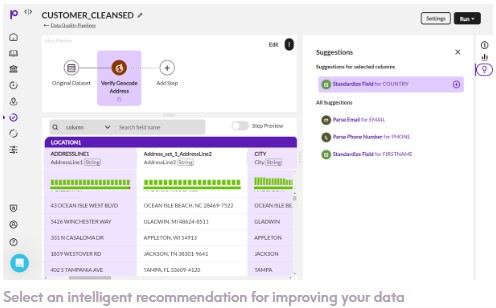
El componente de clasificación automática analiza atributos como el contenido, el contexto y la sensibilidad de cada campo para generar etiquetas basadas en normas internas o regulaciones (GDPR, CCPA). Complementariamente, el linaje de datos documenta visualmente las transformaciones y recorridos de los registros, facilitando auditorías y análisis de impacto en caso de cambios en esquemas o procesos ETL. Estas capacidades se integran con un sistema de aprobación de políticas que orquesta revisiones y autorizaciones escalonadas antes de publicar nuevos conjuntos de datos o modificar definiciones existentes.
Para asegurar una visión holística, la plataforma incorpora dashboards en tiempo real con métricas de cumplimiento, roles y puntuaciones de calidad, así como alertas configurables ante incumplimientos de normas o accesos no autorizados. Gracias a sus conectores nativos y su API REST, puede integrarse fácilmente con data warehouses, herramientas de BI y pipelines de ETL, garantizando que todas las aplicaciones consuman datos gobernados bajo un mismo marco de seguridad y calidad.
¿Qué funcionalidades clave ofrece Precisely Data Integrity Suite Data Governance?
-
Configuración no-code de políticas, procesos y roles.
-
Captura automatizada de metadatos de sistemas fuente.
-
Clasificación semántica e inteligencia artificial para etiquetado.
-
Documentación de linaje de datos end-to-end.
-
Dashboards interactivos con métricas de calidad y cumplimiento.
Detalle de funcionalidades
1. Configuración flexible de políticas y procesos
El servicio ofrece un metamodelo configurable que permite definir de forma ágil las políticas, procesos y roles necesarios para el gobierno de datos. Gracias a su enfoque no-code, los responsables de negocio pueden adaptar fácilmente las reglas de uso, los ciclos de aprobación y los criterios de cumplimiento sin depender de equipos de desarrollo, lo que acelera la adopción y garantiza la coherencia documental en toda la organización.2
2. Captura automatizada de metadatos
Mediante técnicas de harvesting técnico, el módulo extrae de manera continua y automática los metadatos de sistemas fuente, incluyendo esquemas, tablas, vistas y definiciones de campos. Este proceso elimina gran parte del trabajo manual de inventario, asegura una visión siempre actualizada de los activos y sienta las bases para las capas de clasificación y linaje posteriores.
3. Clasificación semántica e inteligencia artificial
Incorpora algoritmos de AI/ML para la autopoblación de descripciones, la clasificación semántica de columnas y la asignación de etiquetas temáticas a los activos. Estas capacidades permiten enriquecer el catálogo con relaciones implícitas y revelar conexiones de negocio, elevando la consistencia y reduciendo los errores humanos en la documentación.
4. Búsqueda y descubribilidad en lenguaje natural
La funcionalidad de búsqueda en lenguaje natural facilita que cualquier usuario, técnico o de negocio, encuentre activos simplemente formulando consultas en su propio idioma. Apoya sinónimos, filtros por etiquetas semánticas y resultados contextuales, lo que impulsa la autonomía de los equipos y disminuye la dependencia del personal de TI.
5. Documentación de linaje y dependencias
Cada activo de datos se vincula automáticamente a sus ancestros y descendientes dentro de flujos, informes o procesos ETL, generando un mapa de linaje detallado. Esta trazabilidad end-to-end ofrece transparencia sobre el origen, las transformaciones y el impacto de cada dato, esencial para auditorías y análisis de riesgos.
6. Asignación de responsabilidades y workflows
El módulo permite asignar cada activo a un data steward, business owner u otro rol de gobernanza, definiendo SLAs, notificaciones y flujos de aprobación personalizados. De este modo, se establece un marco claro de responsabilidad y se automatizan escalados en caso de desviaciones de las políticas establecidas.
7. Paneles de métricas y puntuaciones de gobernanza
Dispone de dashboards interactivos que presentan KPIs como el data governance score, porcentajes de cumplimiento de políticas y tiempos de remediación. Estas métricas ofrecen una visión ejecutiva del estado de gobernanza y ayudan a priorizar iniciativas de mejora continua y a validar resultados ante auditorías.
8. Integración nativa y extensibilidad
Se integra de forma transparente con el catálogo central de la Data Integrity Suite y con soluciones externas de BI, data lakes o arquitecturas de data mesh. Su diseño basado en APIs facilita la incorporación de nuevas fuentes y la extensión de flujos de trabajo, garantizando su evolución junto con el ecosistema de datos corporativo.
Reseña de características técnicas
Precisely Data Integrity Suite Data Governance ofrece un entorno unificado para orquestar de forma centralizada todas las políticas, roles y procesos vinculados a la gobernanza de datos. Su enfoque modular facilita la adopción gradual de capacidades clave, desde la catalogación de metadatos hasta el seguimiento del linaje de datos, pasando por la definición de políticas de acceso y el control de calidad en cada etapa del ciclo de vida de la información.
En el módulo de catalogación de metadatos, la plataforma realiza una exploración automática de orígenes (bases de datos, lagos de datos, sistemas ETL) para indexar esquemas, tablas, columnas y atributos de negocio como propietarios y SLA. Esta capacidad garantiza una visión holística de los activos, reduce la duplicación de esfuerzos y acelera la identificación de recursos relevantes.
La clasificación automática emplea técnicas de machine learning y reglas predefinidas para asignar etiquetas de sensibilidad (datos personales, financieros, críticos) según estándares internos o normativas (GDPR, CCPA). Los resultados pueden ajustarse mediante reglas personalizadas, de modo que cada campo quede correctamente marcado y su acceso quede regulado según el nivel de confidencialidad.
El componente de linaje de datos genera gráficos interactivos que trazan el recorrido de la información desde su origen (sistemas OLTP, procesos ETL) hasta los consumidores finales (dashboards, APIs). Esta visualización de extremo a extremo permite detectar rápidamente puntos de fallo, evaluar el impacto de cambios y cumplir con auditorías internas o regulatorias.
Para la gestión de políticas y roles, el motor interno autoriza acciones de lectura, escritura y aprobación a nivel de proyecto, carpeta o entidad individual. El flujo de trabajo incorpora aprobaciones escalonadas, con notificaciones automáticas y registros detallados de cada solicitud y su resolución, lo que optimiza la colaboración entre equipos de datos y de cumplimiento.
Los dashboards integrados muestran en tiempo real indicadores de cumplimiento, puntuaciones de calidad y alertas ante desviaciones o accesos no autorizados. Además, los informes históricos permiten analizar tendencias y comparativas, proporcionando inteligencia para ajustar políticas y mejorar continuamente la fiabilidad de los datos.
Precisely Data Integrity Suite Data Governance mantiene conectividad nativa con data warehouses (Snowflake, Redshift, Azure Synapse), plataformas de BI (Power BI, Tableau) y pipelines ETL gracias a sus conectores especializados. Su API RESTful facilita la automatización de tareas críticas, como la sincronización de metadatos o la ejecución programada de verificaciones de calidad.
Por último, el control de versiones registra cada modificación en definiciones, políticas y etiquetas, permitiendo restaurar estados previos y comparar diferencias entre versiones. El log de auditoría documenta quién, cuándo y cómo se llevó a cabo cada acción, aportando una trazabilidad exhaustiva que refuerza la gobernanza y el cumplimiento normativo.
Tabla de Fortalezas y Debilidades
| Fortalezas | Debilidades |
|---|---|
| Catalogación centralizada de metadatos que elimina silos de información. | Curva de aprendizaje elevada para usuarios sin experiencia en data governance. |
| Linaje automático con trazabilidad visual de extremo a extremo, acelera auditorías. | Coste de suscripción elevado para PYMES y equipos pequeños. |
| Módulo de calidad de datos con reglas configurables y alertas en tiempo real. | Dependencia de la conectividad en la nube; posible latencia en entornos con ancho de banda limitado. |
| Espacios de colaboración y anotaciones que fomentan la comunicación entre equipos. | Personalización avanzada limitada sin desarrollar sobre la API REST. |
| API REST y conectores nativos para integrar BI, ETL y data warehouses. | Gestión de volúmenes masivos de metadatos puede requerir optimizaciones adicionales. |
| Seguridad granular y registro de auditoría que soporta normativas como GDPR y CCPA. | Interfaz puede resultar sobrecargada en entornos con múltiples proyectos y usuarios simultáneos. |
| Escalabilidad inherente de la arquitectura multiinquilino, sin necesidad de infra on-premise. | Versionado histórico de glosarios y metadatos limitado en comparación con soluciones más maduras. |
Licenciamiento e instalación
En cuanto al licenciamiento, Precisely Data Integrity Suite Data Governance se ofrece mediante suscripción flexible por usuario o por volumen de datos gestionados, incluyendo opciones freemium para pruebas y acuerdos enterprise con soporte avanzado. Respecto al tamaño de empresa, la plataforma escala desde PYMES y equipos reducidos hasta grandes corporaciones, adaptando funcionalidades y niveles de servicio según la envergadura y complejidad del entorno de datos.
En cuanto al tipo de instalación, funciona exclusivamente como solución SaaS en la nube, garantizando despliegue rápido, mantenimiento centralizado y alta disponibilidad sin necesidad de infraestructura on-premise.
Referencias
Página oficial de Precisely Data Integrity Suite: Data Governance Service of the Precisely Data Integrity Suite
- Printer-friendly version
- Log in to post comments
