
Palantir es una empresa estadounidense fundada en 2003 especializada en software de análisis de datos para gobiernos y grandes empresas. Sus dos plataformas principales son Palantir Gotham (orientada a inteligencia y defensa) y Palantir Foundry (orientada a integración de datos empresariales).
Palantir Foundry integra datos de diversas fuentes y consolida información disgregada en un único entorno operativo. La plataforma permite transformar, analizar y orquestar flujos de datos complejos en tiempo real, facilitando la colaboración entre equipos y la toma de decisiones basadas en insights estratégicos. Su arquitectura flexible y escalable se adapta tanto a implementaciones en la nube como a despliegues on-premise, garantizando altos estándares de seguridad y gobernanza.
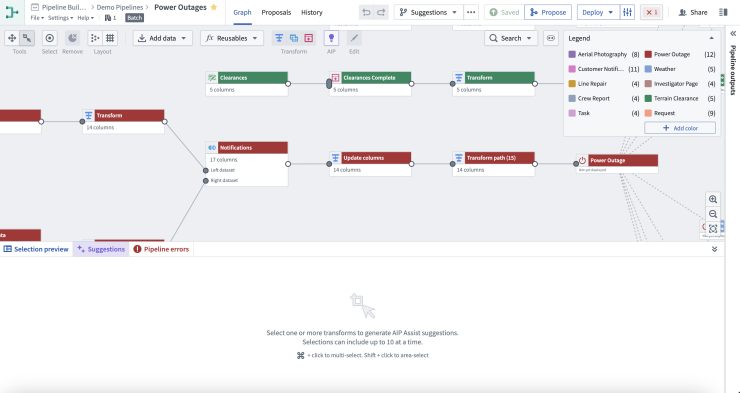
Funcionalidades de Palantir Foundry
-
Integración Multifuente: La herramienta se conecta de forma nativa a sistemas heterogéneos—desde bases de datos tradicionales hasta aplicaciones modernas—garantizando una consolidación de la información sin duplicaciones y manteniendo la trazabilidad de los datos.
-
Ontología Empresarial: En el núcleo de la plataforma se halla la Ontology, una capa semántica que define los objetos, procesos y relaciones propias del negocio. Esto facilita la estandarización de la información y la estructuración de flujos de trabajo que reflejan la realidad operativa de la organización.
-
Transformación y Orquestación de Pipelines: Foundry permite diseñar y ejecutar pipelines de datos complejos. A través de módulos visuales y funcionalidades de bajo código, los usuarios pueden crear procesos de extracción, transformación y carga (ETL/ELT) que se integran de manera dinámica con modelos analíticos y de inteligencia artificial.
-
Colaboración y Visualización: La plataforma ofrece herramientas colaborativas que facilitan la interacción entre analistas, científicos de datos y decisores. Los dashboards y módulos de visualización se actualizan en tiempo real, permitiendo modelar escenarios y ejecutar análisis predictivos de forma interactiva.
-
Seguridad y Gobernanza: Con avanzados controles de acceso, auditorías y cifrado de datos, Foundry garantiza la integridad y protección de la información, cumpliendo con normativas internacionales y estándares de seguridad. Además, su arquitectura favorece la escalabilidad automática y la resiliencia operativa ante altos volúmenes de datos.
-
Flexibilidad en el Despliegue: Disponible tanto en modalidad SaaS como en instalaciones on-premise, la solución se adapta a las necesidades y políticas tecnológicas de organizaciones de distinta envergadura.
Palantir Foundry representa una propuesta disruptiva para la integración y análisis de datos en entornos empresariales. La plataforma centraliza sistemas dispares y facilita la transformación de grandes volúmenes de información en insights operativos, impulsando decisiones estratégicas en tiempo real.
Con una arquitectura distribuida y altamente escalable, Foundry integra de forma nativa datos provenientes de sistemas heterogéneos y los une mediante una Ontologìa propia, que traduce la complejidad empresarial en modelos comprensibles. Las herramientas de diseño de pipelines y orquestación permiten a equipos multidisciplinares configurar procesos automatizados, reduciendo plazos de implementación y consolidando el ecosistema de analítica avanzada.
La seguridad y gobernanza se gestionan con controles de acceso robustos y mecanismos de auditoría, lo que garantiza la integridad de la información sensible y el cumplimiento de normativas. La integración de inteligencia artificial y machine learning potencia el análisis predictivo y la optimización de procesos, abriendo nuevas oportunidades en el campo de la toma de decisiones basada en datos.
Además, la capacidad de colaborar en un entorno unificado impulsa la sinergia entre áreas técnicas y operativas, transformando la cultura corporativa hacia una mayor orientación analítica. Cada módulo de Foundry ofrece herramientas específicas que, combinadas, proporcionan una solución adaptable a las demandas dinámicas del negocio.
Fortalezas y Debilidades de Palantir Foundry
| Fortalezas | Debilidades |
|---|---|
| Integración Multifuente que centraliza información de sistemas heterogéneos. | Coste elevado en comparación con soluciones alternativas en el mercado. |
| Plataforma con Ontology propia que unifica la semántica de negocio. | Complejidad en la implementación que exige una capacitación avanzada para aprovechar todas sus capacidades. |
| Entorno colaborativo que facilita la creación de dashboards y flujos de trabajo en tiempo real. | Curva de aprendizaje pronunciada para usuarios sin experiencia en entornos de integración de datos a gran escala. |
| Seguridad robusta y controles de acceso granulares, garantizando el cumplimiento normativo. | Dependencia de la integración de sistemas legacy, lo que puede presentar retos en ambientes con infraestructuras antiguas. |
| Flexibilidad de despliegue en modalidad SaaS y on-premise, adecuada para diversas escalas empresariales. | Personalización de ciertos módulos puede requerir desarrollos a medida, incrementando la complejidad del proyecto. |
Referencias
Página oficial de Palantir Foundry: Palantir Foundry
- Log in to post comments
